When our old rehearsal space was repurposed, a new space at Holzerhurd came our way: two rooms inside a civil defense shelter. What initially felt like a compromise soon sparked an idea. Instead of trying to recreate what we had before, why not make use of the unusual layout? One room continued to serve as a rehearsal space for three bands, while gradually taking on a second role as the studio’s live room. The other turned into a control room.
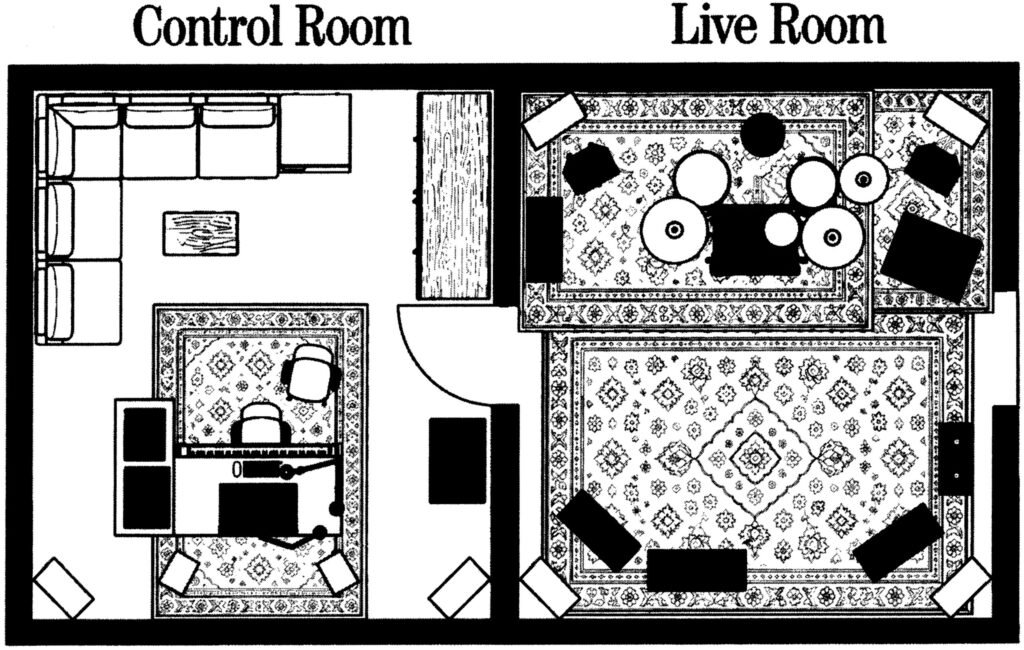
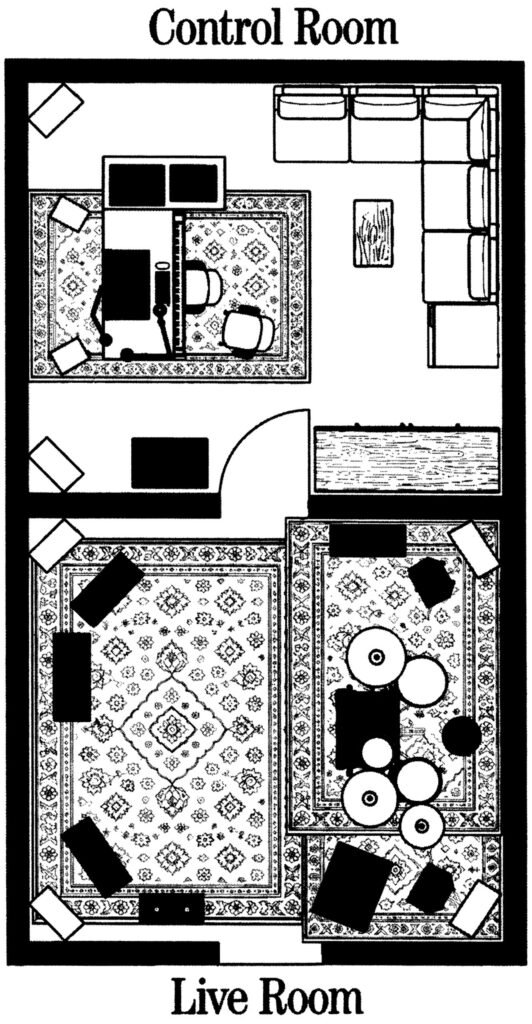
What started out as an idea in spring 2024 has since grown into Shelter Studio: A DIY recording studio built step by step, improving and evolving along the way. Its location inside a civil defense shelter makes it an ideal place for recording. Bands can play at full volume without worrying about the neighbors, while outside noise stays outside.
As a musician myself, playing guitar in PCA as well as in a music project called Pizzeria Holzerhurd, I know the recording process from both sides. The first release recorded entirely at Shelter Studio was with PCA, and since then more bands and projects have found their way into the studio.
When it suits the music, I like to take advantage of the space by recording musicians playing together, capturing the interaction and energy of a shared performance that can be difficult to recreate one instrument at a time. But there’s no fixed formula: every project is different, and the recording process can be shaped around whatever works best for the music.
At its heart, Shelter Studio is about making good recording accessible – a place to take music seriously without taking the process too seriously, with room to experiment and capture what makes each artist or band sound like themselves.
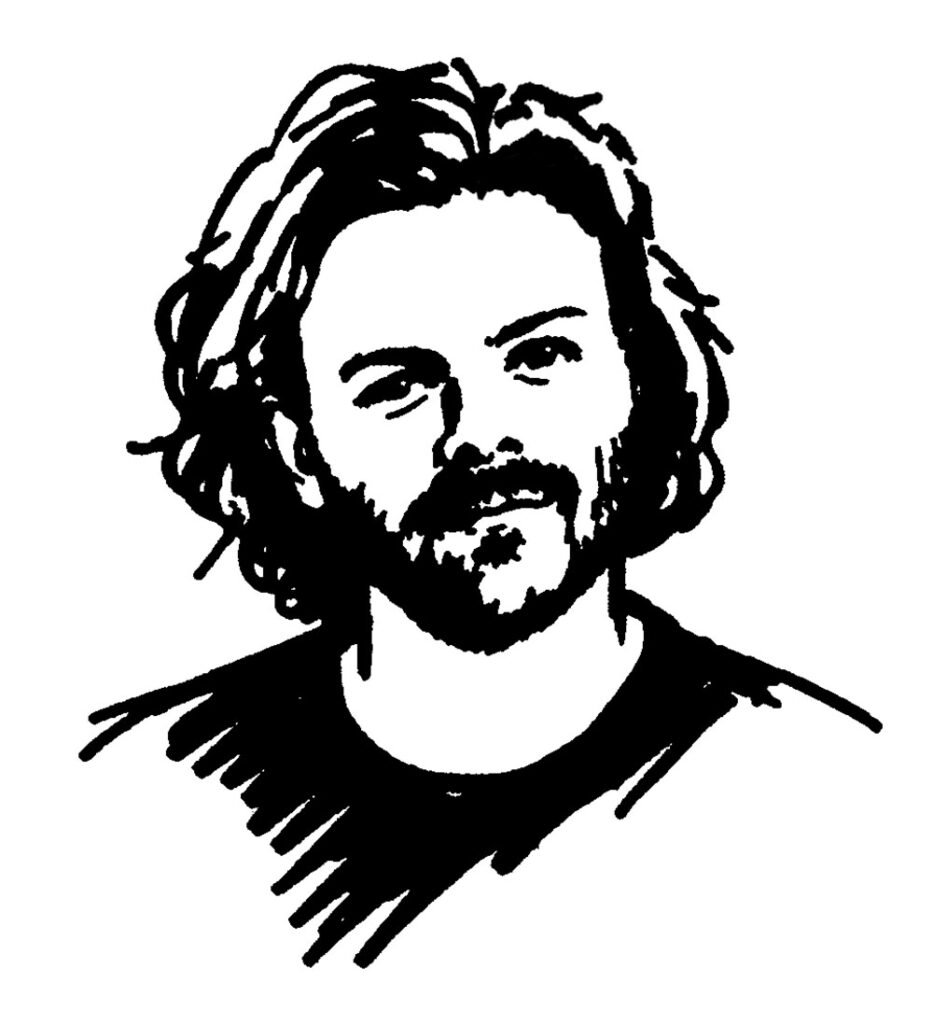
My name is Damian Shepherd. I started playing piano at seven, later switched to guitar, and have been obsessed with music ever since. Over the years, I became increasingly interested in recording and mixing, and in understanding how recordings are made.
My background is in graphic design, and I see a lot of parallels between visual design and music. Both require a solid understanding of the tools and processes involved, but ultimately, artistic decisions come down to taste.
Over the years, I have independently developed my own approach to recording and mixing, both through making my own music and recording other bands. For me, technical knowledge is there to serve the music. In my view, there is rarely one objectively correct way to mix a song. What matters is knowing the possibilities and making the choices that make the song work as a whole. The same applies to equipment: expensive gear can be nice to have, but I don’t believe it is what ultimately makes a good recording or mix. If it sounds good, it is good.
The studio consists of an acoustically treated live room and a separate, acoustically treated control room, allowing everything from individual overdubs to full-band recording, with up to 46 channels available simultaneously.
The drum kit is fully miked and ready to record. Guitars, bass, vocals and other instruments can all be recorded simultaneously. The control room can also serve as an additional recording space whenever acoustic separation is useful. For example, a large-diaphragm tube microphone can be set up there for vocals while the rest of the band plays in the live room, with virtually no bleed between the two spaces.
There is a selection of dynamic, small- and large-diaphragm condensers and ribbon microphones available, so the setup can be adapted to the instrument and the kind of sound you’re after.
Two Fender guitar amps, a Deluxe Reverb and a Hot Rod Deluxe, are permanently miked and ready to record. For bass, there is a Marshall DBS 7200 with an Ampeg SVT-410HLF cabinet. You’re also very welcome to use your own instruments, amps and heads. A 4×12 guitar cabinet is available in the studio, so if you bring your own head, there’s no need to bring a cabinet as well.
Two isolation cabinets, fitted with Jensen C12K and C12N speakers, allow guitar amps to be recorded without filling the live room with their sound. This means guitarists can play through real amps while monitoring through headphones, even with the drum kit being recorded in the same room, with virtually no guitar bleed into the drum microphones. This allows the band to play together while still retaining a high degree of separation and flexibility for the mix afterwards.
In-ear monitoring with individual monitor mixes is available, so everyone can decide what they need to hear while recording.
An 88-key Studiologic SL88 Grand with weighted wooden keys is also available for piano, MIDI and other keyboard parts.
The live room is acoustically treated to create a controlled, relatively dry sound without making the space completely dead. Floor-to-ceiling Rockwool bass traps, and acoustic treatment throughout the room keeps reflections and low frequencies under control while retaining enough natural character for instruments to feel alive.
All this provides a flexible starting point for recording. Rather than having a strong room sound permanently baked into every microphone, ambience and space can be shaped later depending on what the music needs. There is also the possibility of using other parts of the civil defense shelter as a natural echo chamber, adding real room ambience when a recording calls for it.
The studio can also be used for analog and hybrid recording. A Tascam Model 312B analog console, Fostex R8 ¼-inch 8-track tape machine, Tascam 246 four-track cassette recorder and various pieces of analog outboard gear make it possible to record and premix directly to tape. Analog and digital recording can also be combined within the same session, or existing tracks can be sent back through analog equipment and tape for further processing.
Recording, mixing and mastering can all be done here, but mixing and mastering are also available for music recorded elsewhere.
Mixing takes place in the acoustically treated control room with room correction, providing a reliable listening environment.
All of the music featured on this website was recorded at Shelter Studio, with most of it also mixed and mastered here. The recordings themselves are probably the best way to get an idea of what can be done here and what it can sound like.
A one-time setup fee covers the cost of preparing the studio and recording session before you arrive, including basic routing and preparation of the existing studio setup.
If the setup can remain in place over several recording days, the setup fee does not need to be charged again. This should be arranged in advance.
The hourly rate starts once we begin setting up for the actual recording together. This includes plugging in and setting up instruments, setting levels and sounds, adjusting monitor mixes, soundcheck and, of course, the recording itself.
Studio time is billed in 15-minute increments.
Changes during the session, such as setting up another instrument, changing microphones or preparing a different setup for the next song, are simply part of the studio time and are charged at the same hourly rate. Needless to mention, any time spent fixing technical issues on the studio’s side will not be charged.
Mixing includes balancing, EQ, compression, effects, automation and other processing needed to turn the individual tracks into a finished mix.
Basic editing and cleanup that naturally form part of the mixing process are included, as are up to two rounds of revisions.
More extensive editing or production work, such as vocal comping and tuning, detailed timing correction, drum editing or similar work, is charged separately at CHF 50.– per hour. Any additional work will be discussed beforehand.
Revisions beyond the two included rounds are also charged at CHF 50.– per hour. The price applies to songs up to 10 minutes in length. For longer pieces, please get in touch for an individual price.
Mastering for digital release and streaming is CHF 50.– per song.
An additional master prepared for vinyl is available for CHF 20.– per song. For full albums or more complex vinyl releases, pricing can be discussed individually.
Recording to tape is available at the regular studio rate. If fresh tape is requested or required for a session, the cost of the tape is charged separately.
Existing studio tape can also be used at no additional material cost where available, provided it can be erased and reused afterwards.
Every project is different, which means the exact setup, workflow and expected costs are discussed before the session. This is especially useful for larger or less conventional projects where a simple hourly or per-song price may not tell the whole story.
If you’re not sure what your project would involve or have any questions about the pricing, feel free to get in touch through the contact form.
Prices may change over time. Only the current prices listed on this website at the time of booking are valid.
Shelter Studio
Damian Shepherd
Holzerhurd, Zürich